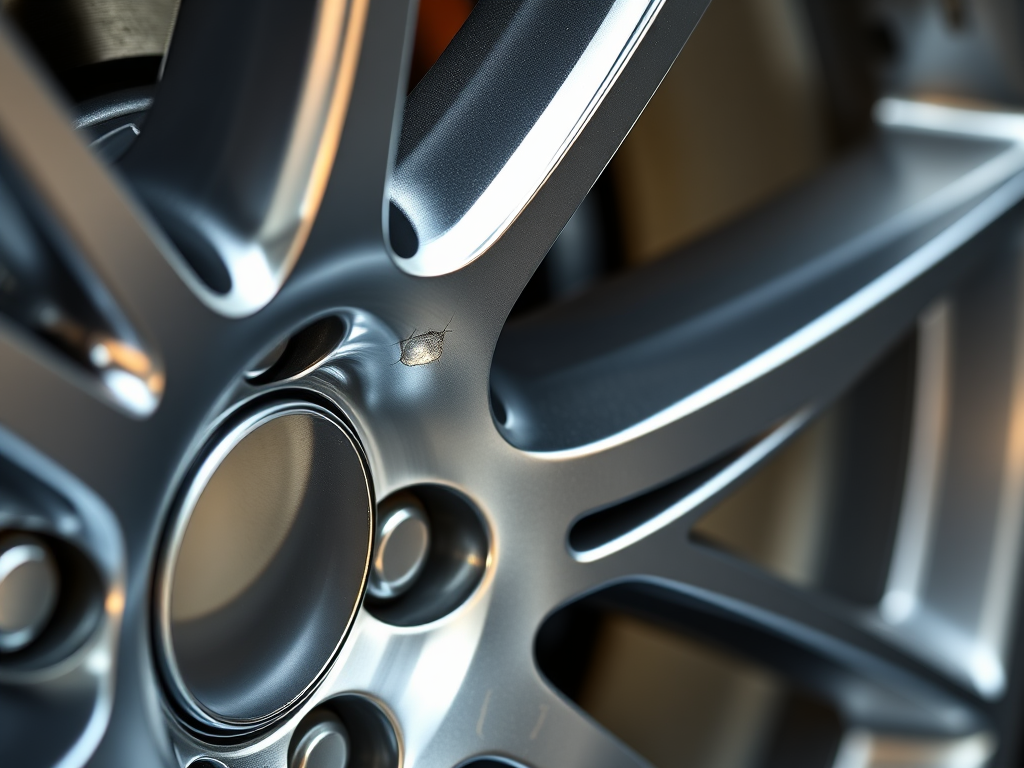
Let’s face it: nothing elevates the look of a car quite like a set of Diamond Cut alloy wheels. That stunning, metallic, high-shine face achieved through CNC machining looks utterly premium.
But before you sign on the dotted line for that new car or custom set of wheels, you need to know a dark secret: Diamond Cut wheels are a huge financial liability.
Here is the simple chemistry of why that tiny, insignificant chip on your wheel will quickly turn into an expensive repair bill.
1. The Finish is a House of Cards
The beautiful, polished face of a Diamond Cut wheel is not the same durable finish you get with standard powder-coated alloys. It consists of three critical layers:
- Base Colour: A layer of paint or powder coat underneath.
- Bare Aluminium: The high-shine surface is created by physically cutting away the metal using a precise CNC lathe. This means the metal is essentially bare and exposed.
- Clear Lacquer: A thin, transparent layer of lacquer is applied over the bare aluminium to seal it and provide a protective barrier against the elements.
2. The Chip is a Breach of Defence
This is where the trouble starts. That thin layer of clear lacquer is the only thing protecting the sensitive bare aluminium.
- A Tiny Stone Chip: A small stone flicked up on the motorway, or even a splash of grit from the road, creates a tiny crack or chip in the lacquer.
- Moisture Ingress: This breach allows air and moisture—and worse, road salt and corrosive chemicals—to seep directly onto the bare aluminium surface underneath the clear coat.
- The Reaction: Aluminium, being highly reactive, immediately begins to oxidise (rust). Aluminium oxidation creates aluminium oxide, which presents as a chalky, white or grey powder.
3. The Corrosion Spreads Like a Virus
The real killer is that this corrosion doesn’t stay confined to the tiny chip site.
Because the oxidised aluminium takes up more volume than the pure metal, the corrosion expands laterally. This physical expansion pushes the clear lacquer away from the wheel surface, leading to the telltale signs of failure:
❗ The telltale sign of a Diamond Cut failure is the appearance of milky white, spider-web-like trails and bubbles spreading underneath the lacquer.
Once this begins, the only way to permanently fix the issue is to completely remove the corroded material.
4. The Expensive Fix: CNC Machining is Non-Negotiable
You cannot simply sand down the spot and spray a little clear coat on it.
To repair a Diamond Cut wheel, a specialist wheel refurbisher must:
- Strip the wheel back to the bare metal and then paint agin.
- Scan the precise profile of the wheel on a specialised CNC lathe.
- Machine the entire wheel face to remove a micron-thin layer of metal, completely eradicating the corrosion and restoring the perfect, flat profile.
- Re-lacquer the entire face.
This specialized process is far more complex and expensive than standard powder coating, often costing 2-3 times more for a single wheel repair. Furthermore, because the process involves removing metal, your wheels can typically only be safely repaired 1-2 times before they are structurally compromised.
The Verdict
Diamond Cut wheels are high-maintenance beauties. If you live in an area with harsh winters, poor road surfaces, or simply hate the idea of costly, specialized repairs for every tiny chip, you might be better off sticking to a durable, full-powder-coated finish.
Are Diamond Cut alloys worth the risk and the cost? Let me know your experiences in the comments!
Leave a Reply